
The Japandi aesthetic seamlessly marries Japanese minimalism with Scandinavian functionality, creating serene and inviting living spaces. This design philosophy emphasizes natural materials, simplicity, and a focus on comfort, making it an ideal choice for creating a retreat-like living room. In this article, we will explore 13 stunning Japandi living room designs that evoke a sense of tranquility and balance, perfect for unwinding after a long day.
In a world where chaos often reigns, the Japandi style offers a breath of fresh air through its understated elegance and connection to nature. Characterized by neutral color palettes, clean lines, and a mix of textures, these designs showcase how beauty can be found in simplicity. Whether you’re planning a full renovation or just looking for inspiration, these Japandi living rooms will inspire you to create your own peaceful oasis.
Join us as we delve into each design, highlighting key elements that define the Japandi style. From furniture choices to decor accents, discover how to transform your living space into a serene retreat that reflects your personal style while promoting relaxation and mindfulness.
1. Serene Neutral Palette
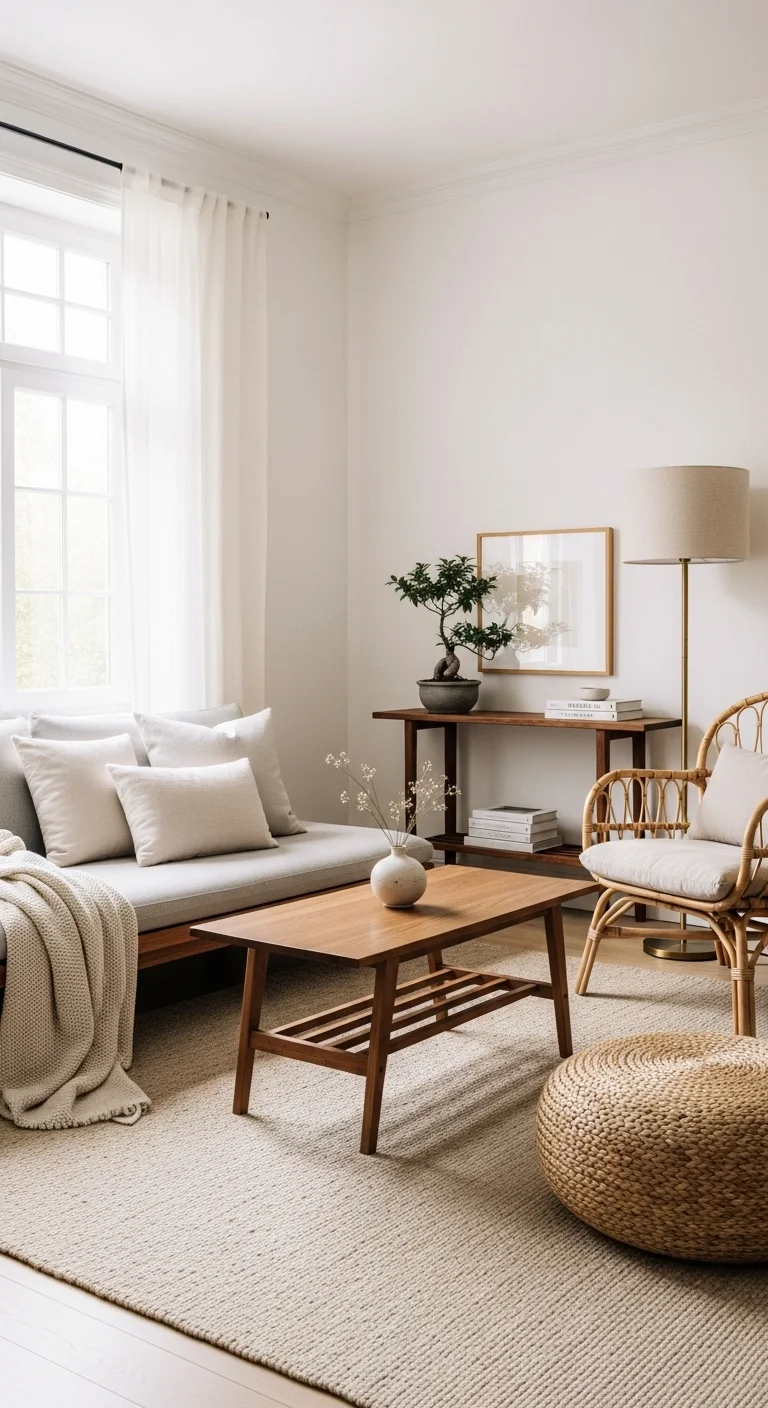
The use of soft beiges, warm whites, and delicate greys sets the tone for a tranquil Japandi living room. This serene color palette creates a calming atmosphere, allowing natural light to bounce around the space, enhancing its openness. The choice of muted tones complements the room’s minimalist furnishings, providing a perfect backdrop for relaxation.
Textured fabrics in the form of linen throw pillows and woolen blankets add warmth and comfort, inviting you to sink in and unwind. Accents of dark wood or rattan can be incorporated through furniture pieces, creating a harmonious balance that feels both cozy and sophisticated.
2. Natural Elements Galore
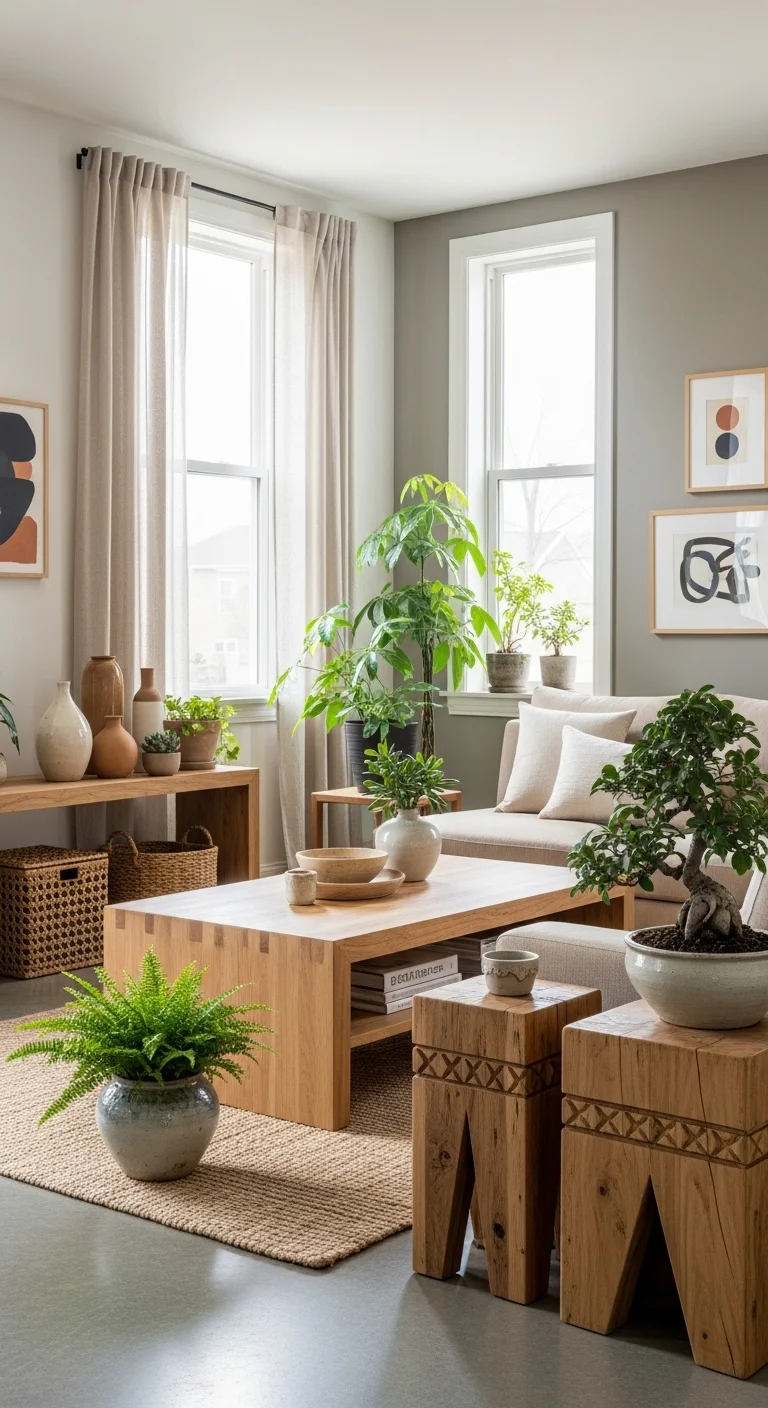
Incorporating natural elements is key to achieving a Japandi aesthetic. Picture a living room adorned with indoor plants, such as leafy ferns or minimalist bonsai trees, which breathe life into the environment. The organic shapes and vibrant greens contrast beautifully with a backdrop of muted tones, enhancing the room’s overall serenity.
Wooden elements are also essential; a solid wood coffee table or a handcrafted side table can serve as functional art pieces. The warmth of the wood complements the coolness of the decor, creating a harmonious blend that feels like a peaceful retreat.
3. Zen Minimalism
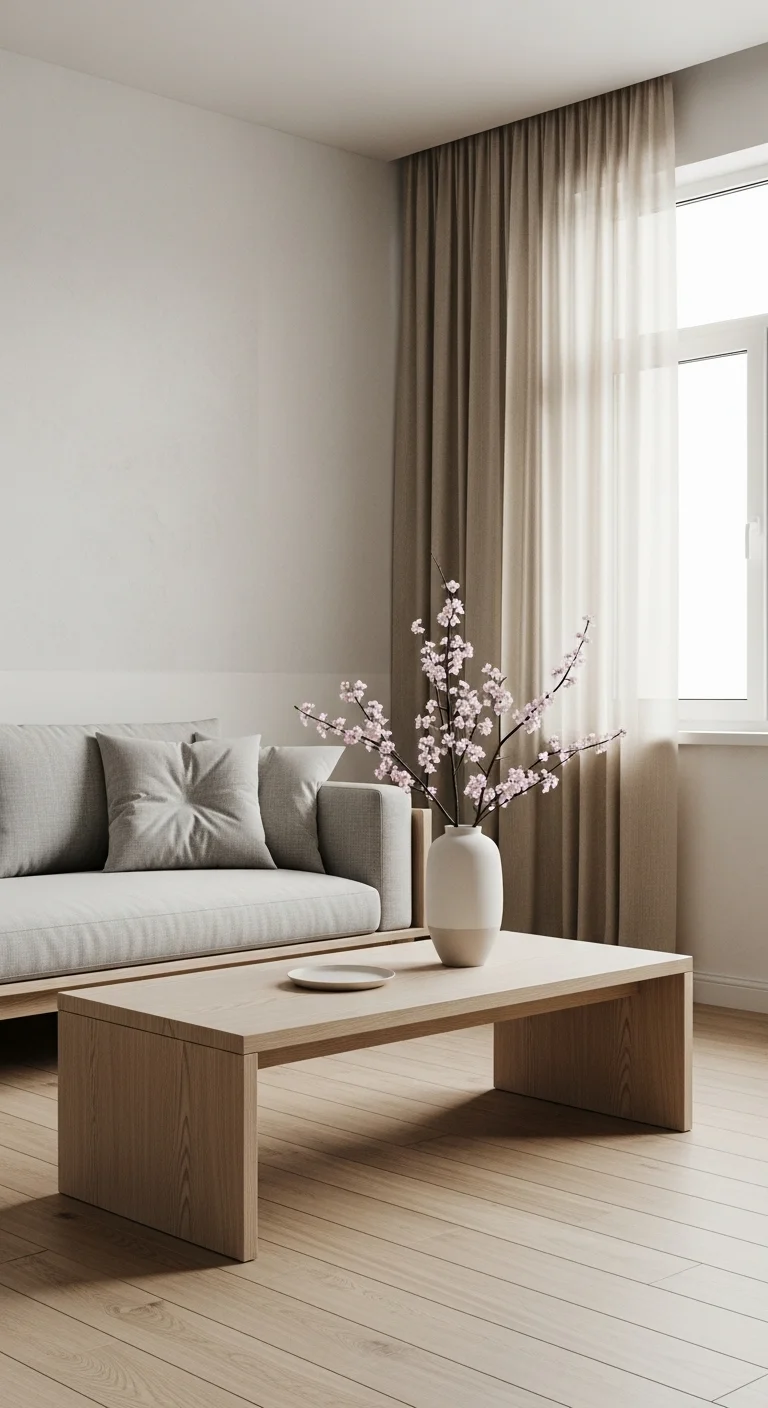
Zen minimalism encapsulates the essence of Japandi design, where less truly is more. Imagine a space with only essential furniture pieces, like a low-profile sofa paired with a sleek, modern coffee table. This approach eliminates clutter, allowing the eye to rest and the mind to relax.
Strategically placed decorative items, such as a single vase or an art piece, draw attention without overwhelming the senses. The result is a peaceful, uncluttered environment that encourages mindfulness, making it an ideal retreat for unwinding after a long day.
4. Soft Textures and Layers
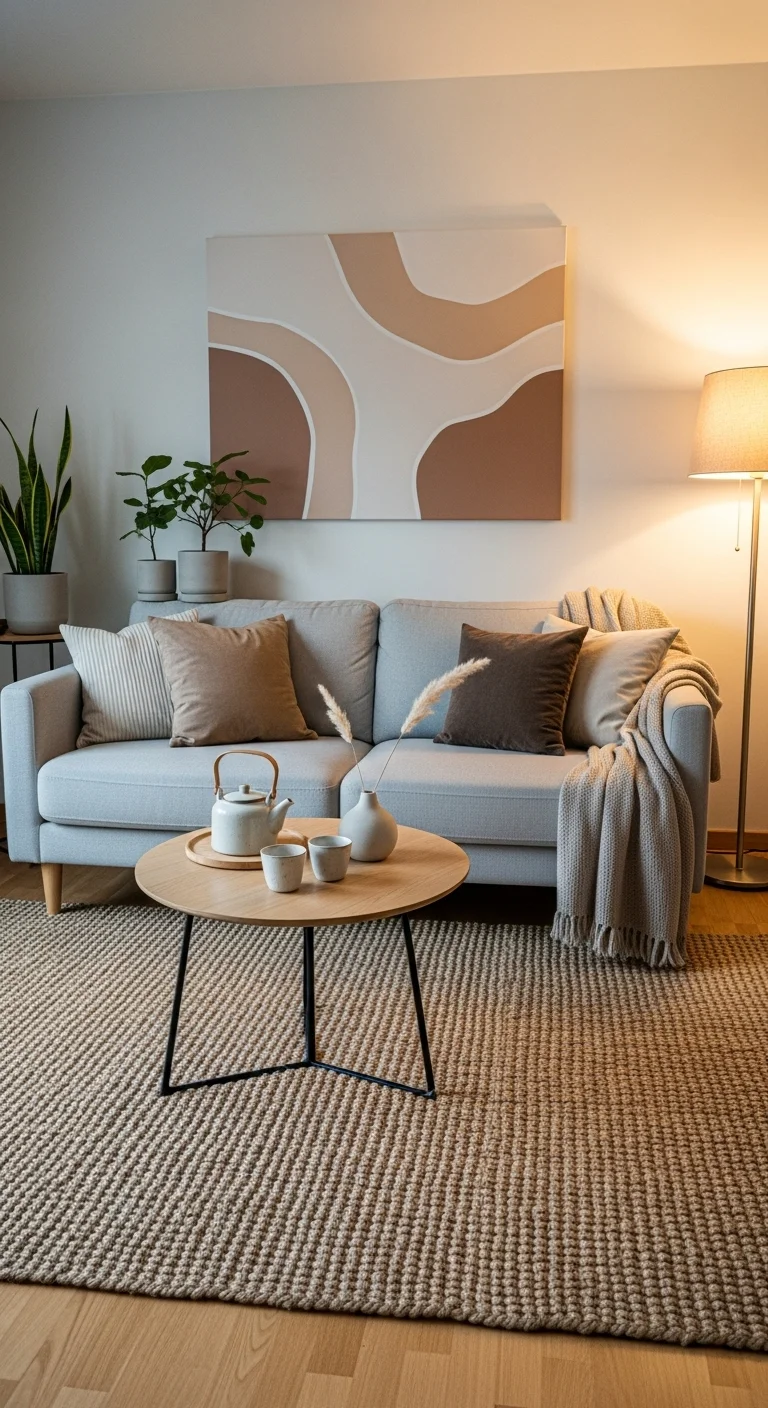
Layering soft textures is essential in creating a warm and inviting Japandi living room. Picture a plush area rug underfoot that adds depth and comfort, inviting you to walk barefoot. Complement this with a variety of cushions and throws in different materials, such as cotton, linen, and wool, which create a tactile experience that engages the senses.
These soft elements can be arranged thoughtfully on a minimalist sofa, creating a cozy nook for reading or relaxation. The combination of textures not only enhances visual interest but also envelops you in a comforting embrace, making the space feel like a true retreat.
5. Functional Yet Beautiful
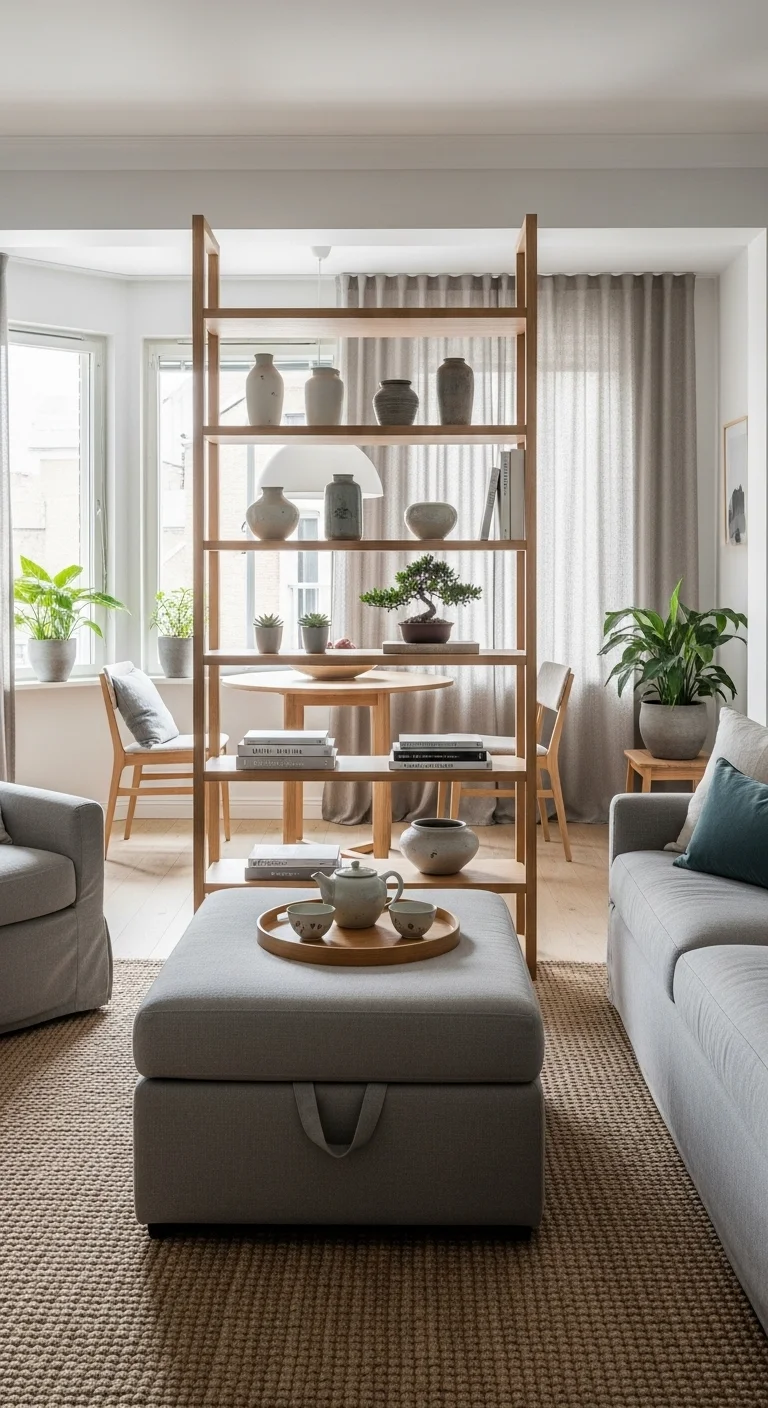
In Japandi design, functionality meets beauty seamlessly. Imagine a living room where every piece of furniture serves a purpose while also contributing to the overall aesthetic. A stylish bookshelf doubles as a room divider, showcasing curated decor items that add character without sacrificing space.
Multifunctional furniture, such as an ottoman that can be used for seating or as a coffee table, epitomizes this philosophy. The clever arrangement of these pieces creates a fluid layout that fosters a sense of openness and practicality, making the living room a perfect retreat for both relaxation and socializing.
6. Artful Simplicity
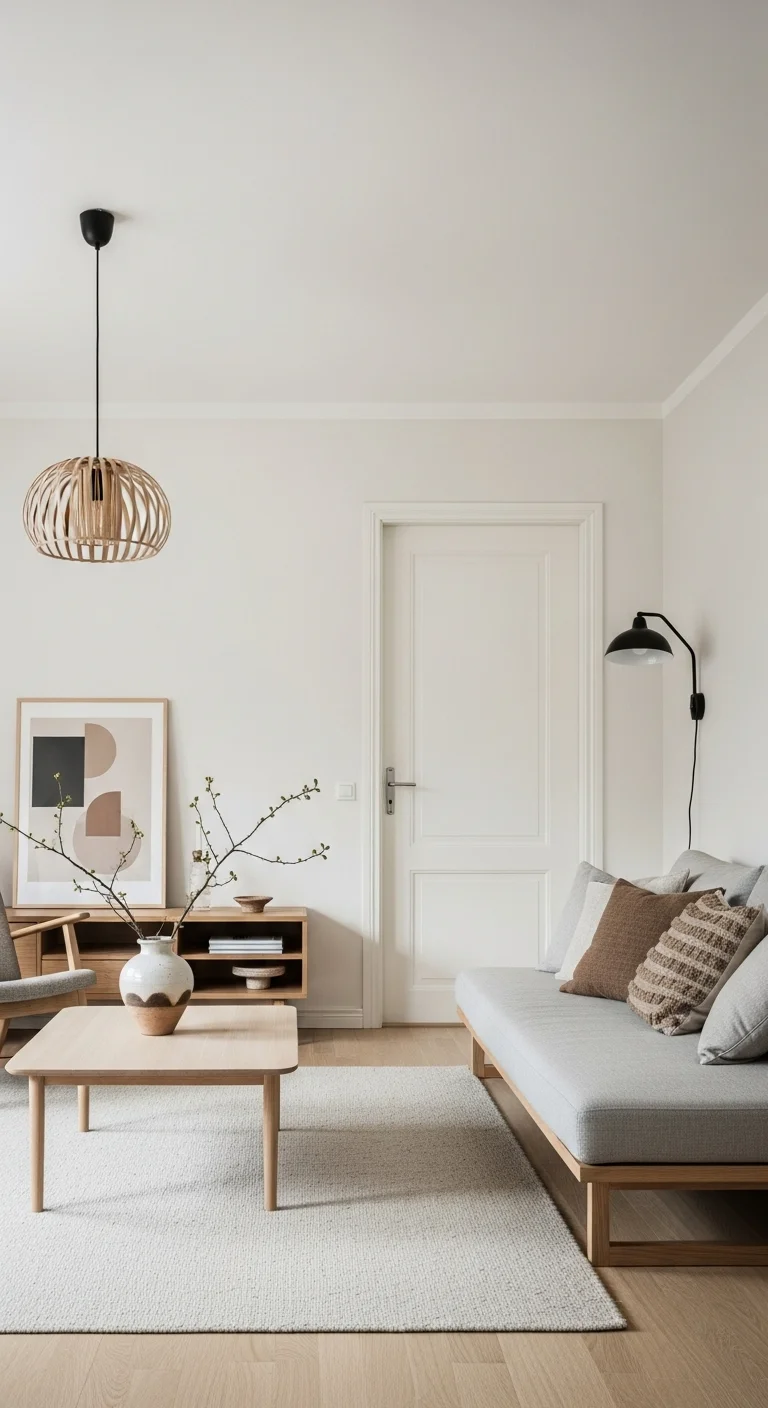
Artful simplicity is at the heart of Japandi design, where each item speaks to the beauty of simplicity. Envision a living room with carefully chosen artwork that reflects nature or abstract forms, adding character without overwhelming the space. The artwork should align with the room’s color palette, enhancing the tranquil atmosphere.
Incorporating elements like handmade ceramics or unique sculptures on shelves or tables provides visual interest and serves as conversation starters. This blend of art and design invites creativity and inspiration, making the living room a delightful retreat for both relaxation and artistic expression.
7. Nature-Inspired Textures
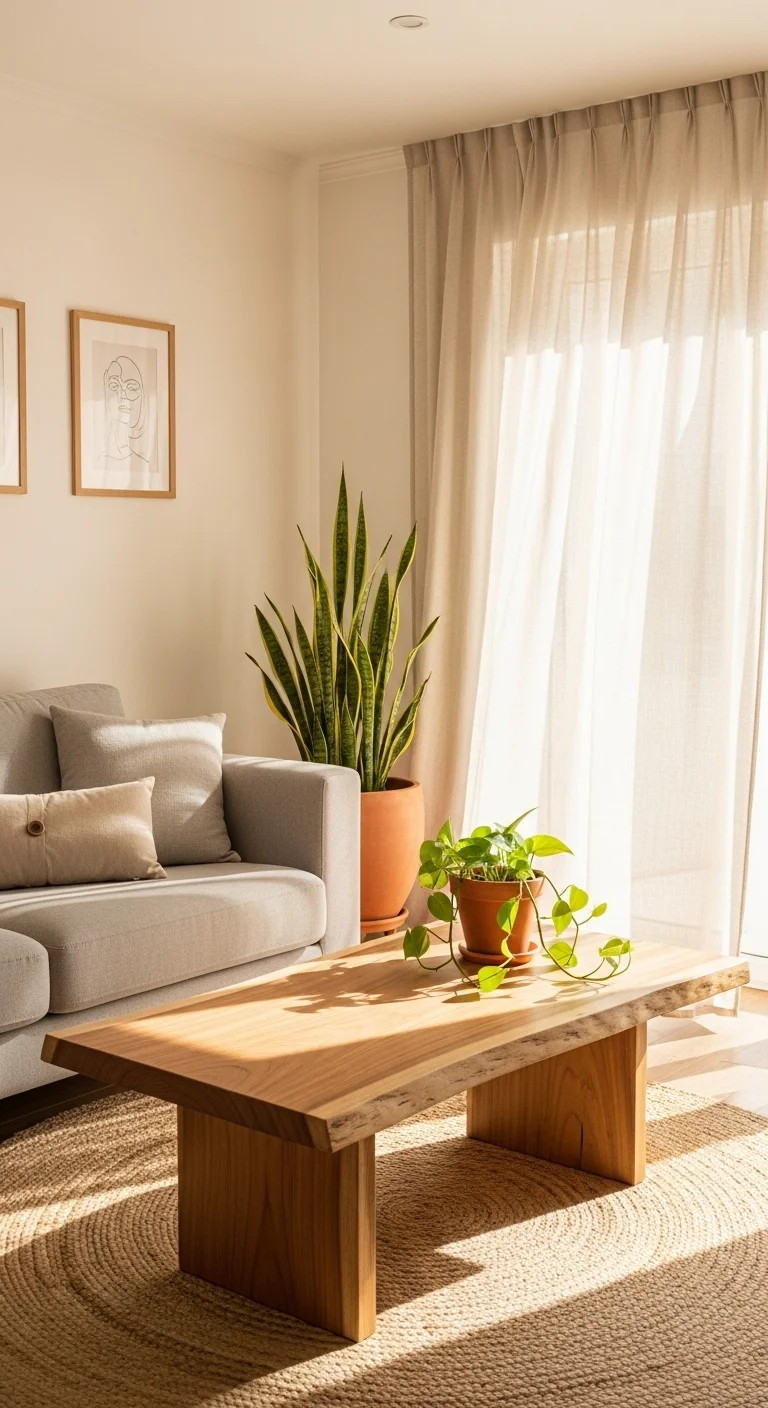
In this Japandi living room, natural textures take center stage, creating a serene atmosphere. Soft linen curtains drape elegantly from the ceiling, allowing gentle sunlight to filter through while providing privacy. The earthy tones of a jute rug complement the wooden flooring, grounding the space with warmth.
A statement piece, like a live-edge coffee table, adds an organic touch. Decorative elements such as terracotta pots with lush greenery bring life indoors, enhancing the tranquil vibe. This combination of textures invites relaxation, making it a perfect retreat for unwinding after a long day.
8. Minimalist Furniture Arrangement
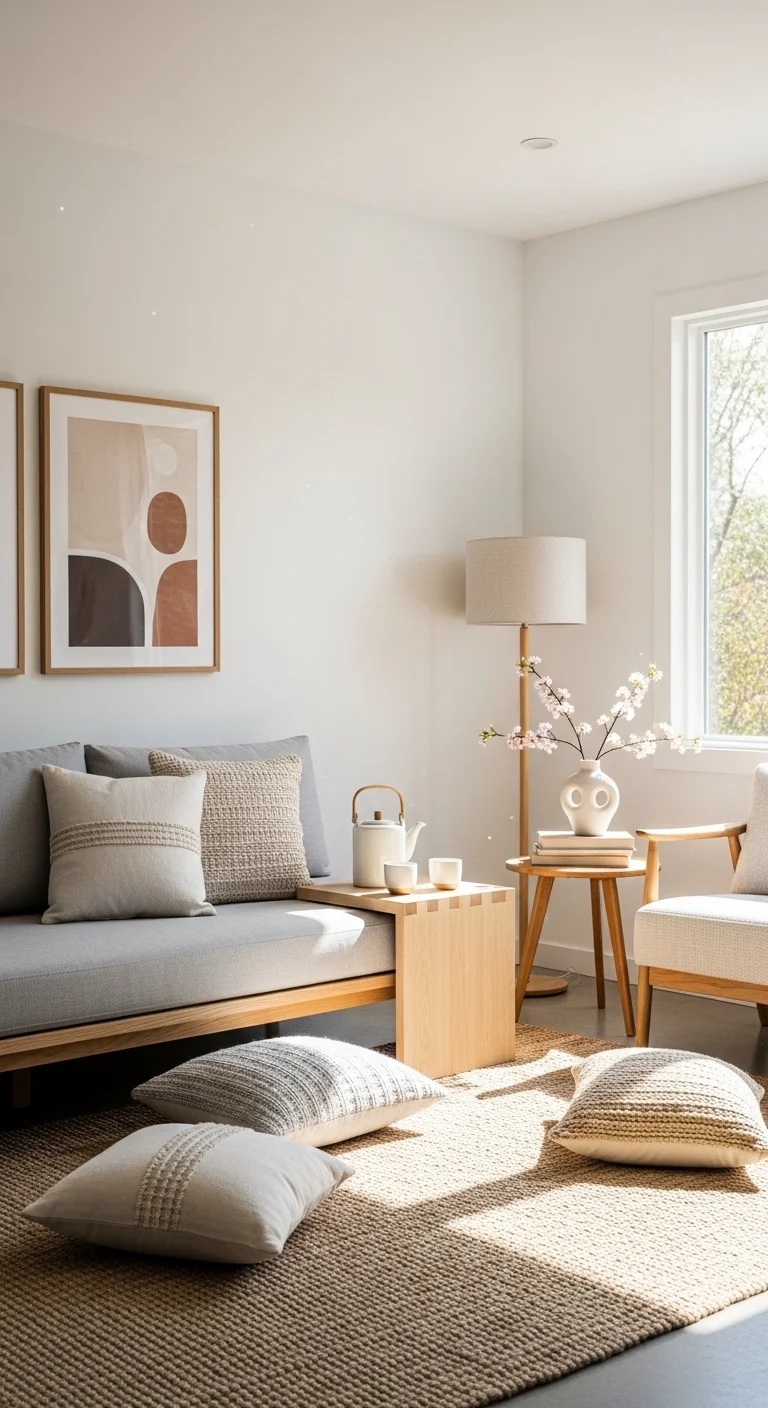
Embracing minimalism, this Japandi living room showcases a smart furniture arrangement that promotes fluidity and comfort. A low-profile sofa in a muted palette is complemented by a simple wooden side table, allowing for easy movement throughout the space. The minimalist approach reduces visual clutter, making the room feel open and airy.
A cozy reading nook is created by placing a stylish armchair near a window, inviting natural light for leisurely reading. Accent cushions in soft textures add a hint of comfort, transforming this minimalist setup into an inviting retreat for relaxation and reflection.
9. Harmonious Color Palette
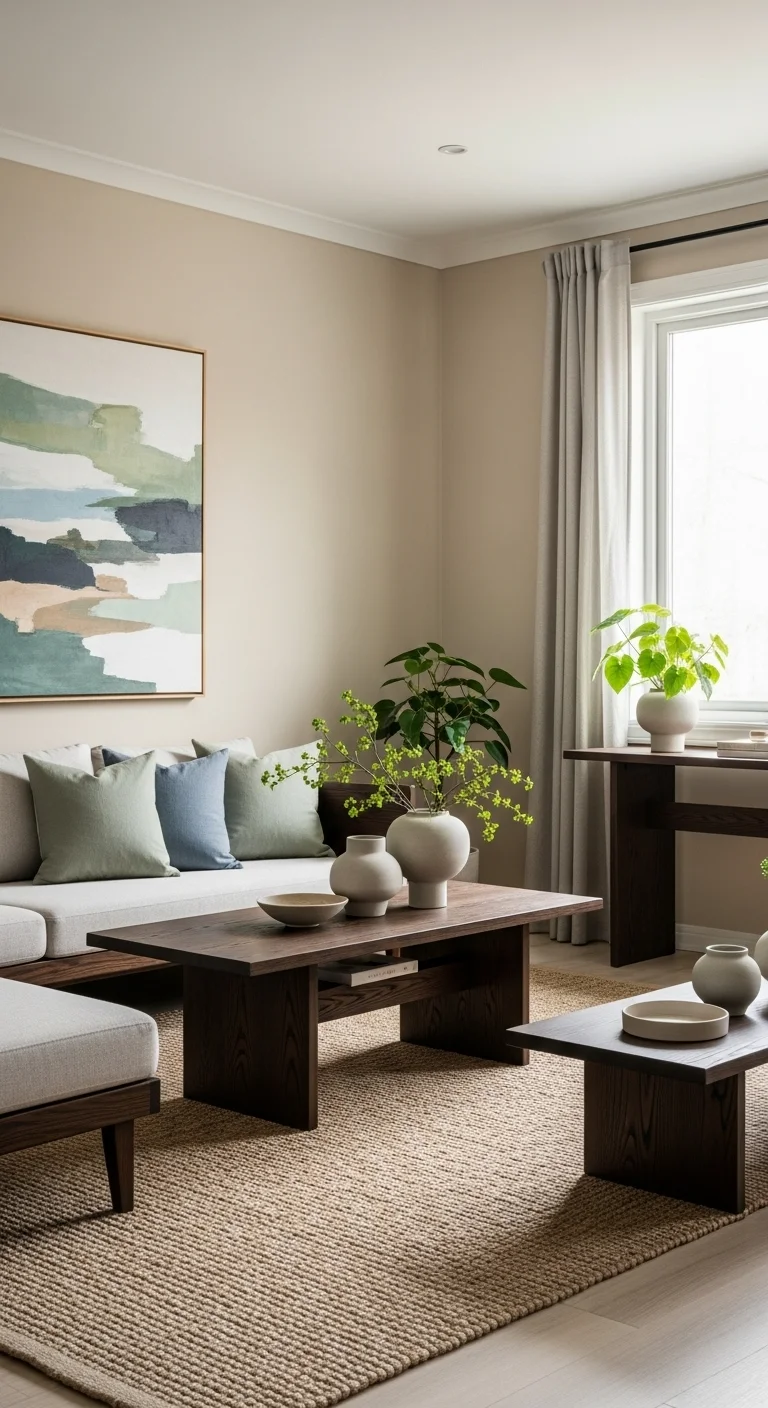
This Japandi design embraces a harmonious color palette that promotes tranquility and balance. Soft beige walls provide a calming backdrop, while dark wood accents add depth and sophistication. Subtle hues of green and blue in decorative elements, such as cushions and artwork, introduce a refreshing touch that connects the space to nature.
The cohesive color scheme fosters a sense of peace, making it an ideal environment for relaxation. The careful selection of colors and materials enhances the overall aesthetic, allowing the living room to feel like a serene retreat, perfect for unwinding after a busy day.
10. Functional Yet Stylish Storage Solutions
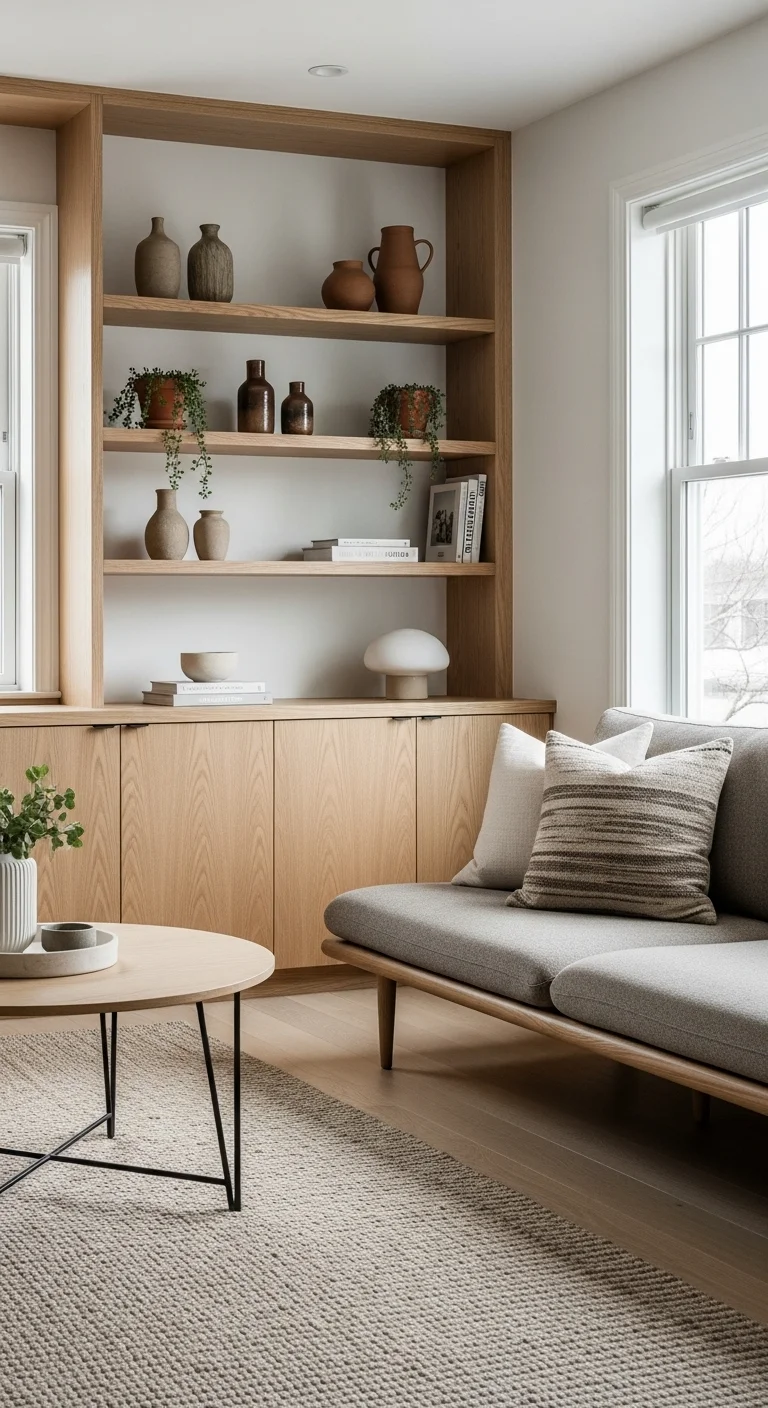
In this Japandi living room, stylish storage solutions blend seamlessly with the overall design, maintaining the minimalist ethos. Sleek, built-in shelving units showcase curated decor while providing essential storage space. These units are crafted from natural wood, enhancing the organic feel of the room.
A low, minimalist cabinet with clean lines can house books and personal items, keeping the space organized. The thoughtful design ensures that practicality does not compromise style, creating a clutter-free environment that feels both functional and inviting—a true retreat for relaxation and entertainment.
11. Inviting Lighting Fixtures
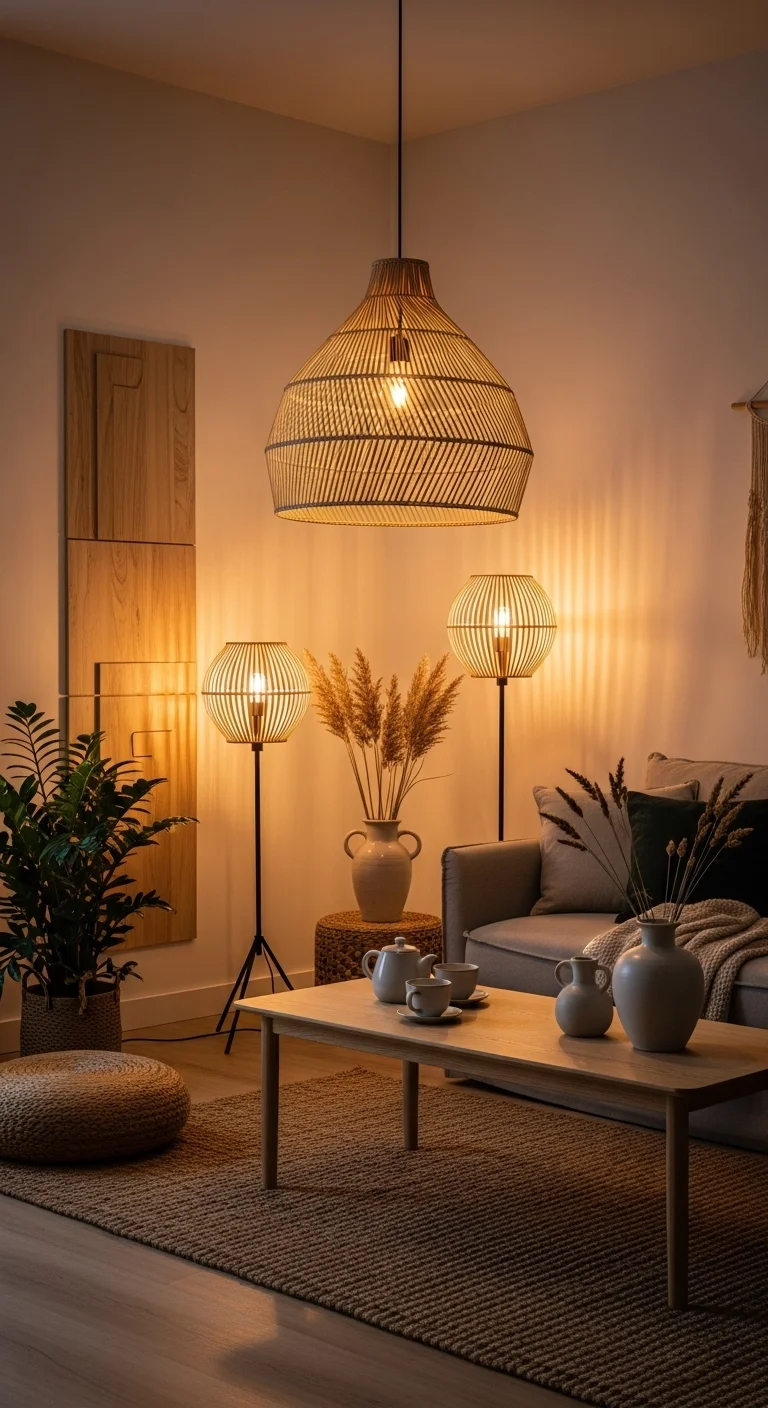
Lighting plays a vital role in creating the warm ambiance characteristic of Japandi design. In this living room, a combination of soft pendant lights and strategically placed floor lamps casts a warm glow, inviting relaxation. The fixtures, made from natural materials like bamboo and rattan, add an organic touch to the space.
The gentle illumination highlights the textures and colors of the room, enhancing its tranquil atmosphere. Adjustable lighting options allow for versatility, making it easy to switch from bright, energizing light to soft, soothing tones for a cozy evening retreat.
12. Artful Wall Decor
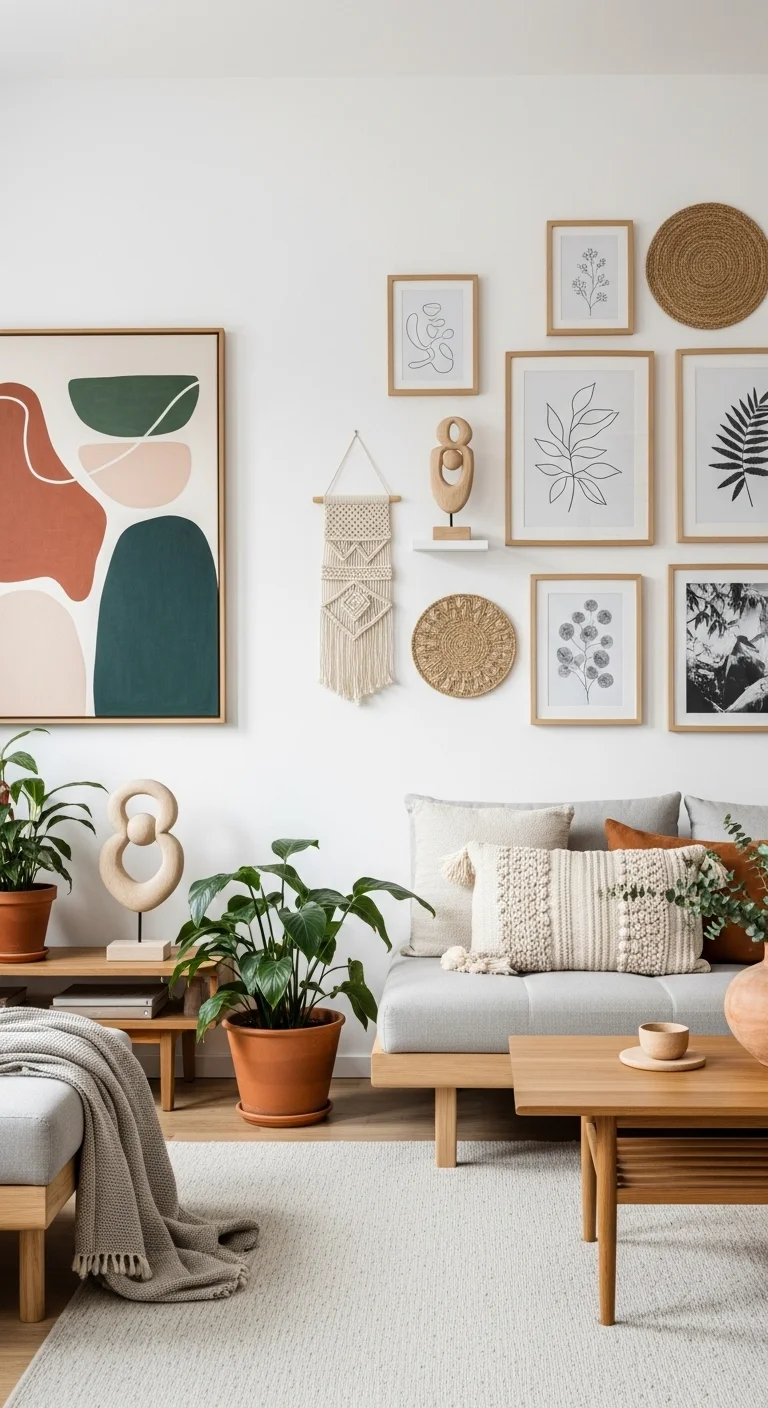
Artful wall decor adds character to this Japandi living room while keeping the design grounded. A large, abstract piece of artwork in earthy tones serves as a focal point, drawing the eye and inviting contemplation. Complementary prints in simple frames are thoughtfully arranged to create a gallery wall that feels curated yet effortless.
Natural materials, such as woven wall hangings or wooden sculptures, further enhance the aesthetic. These decorative elements contribute to the overall serene vibe of the room, making it an inspiring retreat for creativity and relaxation.
13. Serene Minimalism with Natural Textures
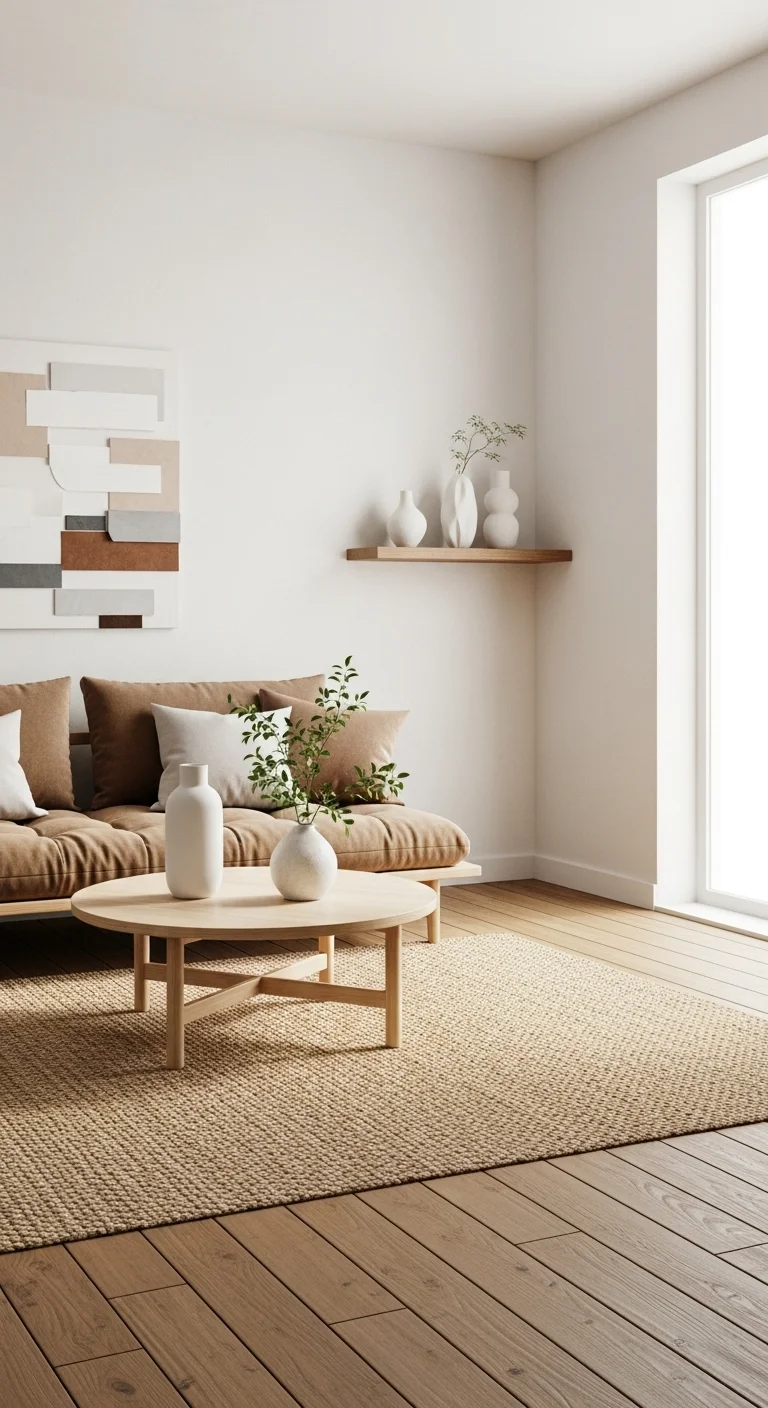
This Japandi living room embodies serene minimalism, featuring a muted color palette of soft whites and light browns. The focal point is a low-profile, earthy-toned sofa adorned with plush cushions, inviting relaxation. A simple, round wooden coffee table sits at the center, showcasing a small potted plant, which adds a touch of greenery — a nod to nature that is so essential in Japandi design.
The room is enhanced by a large window that floods the space with natural light, illuminating the subtle grain of the wooden floors and the soft texture of a woven area rug. Simple, handcrafted decor pieces like ceramic vases and minimalist wall art create a tranquil atmosphere, making this living room feel like a perfect retreat away from the chaos of daily life.
Frequently Asked Questions
What are the key characteristics of Japandi design?
Japandi design is a fusion of Japanese and Scandinavian aesthetics, emphasizing minimalism, functionality, and natural materials. The palette often consists of muted earth tones, soft neutrals, and the occasional pop of color, which helps create a calm and cohesive environment. Key elements include low-profile furniture, organic shapes, and an emphasis on craftsmanship, promoting a sense of harmony and balance in the space.
Additionally, Japandi interiors often feature a mix of textures, such as warm woods, soft textiles, and ceramic accents, which add depth to the minimalist approach. The idea is to create an inviting atmosphere that feels both comfortable and sophisticated, encouraging relaxation and mindfulness as one interacts with the space.
How can I incorporate Japandi elements into my living room?
Incorporating Japandi elements into your living room can be achieved through careful selection of furniture, color schemes, and decor. Start by choosing low-profile furniture pieces that are functional yet stylish, such as a simple wooden coffee table or a sleek sofa with clean lines. Opt for a neutral color palette, using soft whites, beiges, or grays as the base, and add natural textures through cushions, throws, and rugs to create warmth and comfort.
Integrate natural materials like bamboo, rattan, or reclaimed wood into your decor. Additionally, consider adding greenery with potted plants or minimalist floral arrangements to bring a touch of nature indoors. Remember that clutter can disrupt the tranquility of a Japandi space, so aim for a clean and organized layout that promotes relaxation.
What furniture styles complement Japandi design?
Furniture styles that complement Japandi design include mid-century modern, Scandinavian-inspired pieces, and traditional Japanese furniture. Look for items that feature clean lines, organic shapes, and a focus on craftsmanship. For instance, a mid-century modern armchair with tapered legs or a simple Japanese low table can enhance the Japandi aesthetic beautifully.
Additionally, incorporating multifunctional furniture can maximize space and maintain the minimalist vibe. Pieces such as ottomans that double as storage or bookshelves that showcase decor while keeping clutter at bay are excellent choices. The goal is to create a cohesive look that feels both stylish and practical.
Are there any specific color schemes associated with Japandi style?
Yes, Japandi style typically features a color scheme that revolves around neutral tones and muted earth colors. Soft whites, gentle beiges, and warm greys serve as the foundation, creating a serene backdrop. To add depth, consider using darker shades like deep greens or warm browns as accents in furniture or decor items. This combination promotes a calming atmosphere that aligns with the Japandi philosophy of connecting with nature.
Incorporating pops of color can also be effective, but it’s essential to keep them subtle and harmonious with the overall palette. Think of soft pastels or muted jewel tones that can be introduced through textiles, artwork, or decorative accessories.
How does Japandi design promote mindfulness in living spaces?
Japandi design promotes mindfulness by creating serene and uncluttered environments that encourage relaxation and reflection. The focus on minimalism helps eliminate distractions, allowing individuals to fully engage with their surroundings. By incorporating natural materials and soft textures, Japandi spaces evoke a sense of calm and connection to nature, which can be incredibly grounding.
Furthermore, the thoughtful arrangement of furniture and decor encourages a flow that enhances functionality while maintaining aesthetic appeal. This intentional design approach not only uplifts the spirit but also fosters a sense of peace, making the living room a true retreat for unwinding and rejuvenating.
Conclusion
Japandi living room designs are a perfect blend of functionality and tranquility, providing a retreat-like atmosphere that nurtures the soul. By embracing simplicity, natural materials, and a cohesive color palette, anyone can create a space that invites relaxation and promotes mindfulness.
Whether you opt for a complete redesign or just incorporate a few key elements, the beauty of Japandi style lies in its adaptability. Let these 13 designs inspire you to transform your living room into a serene haven where you can escape the hustle and bustle of everyday life.